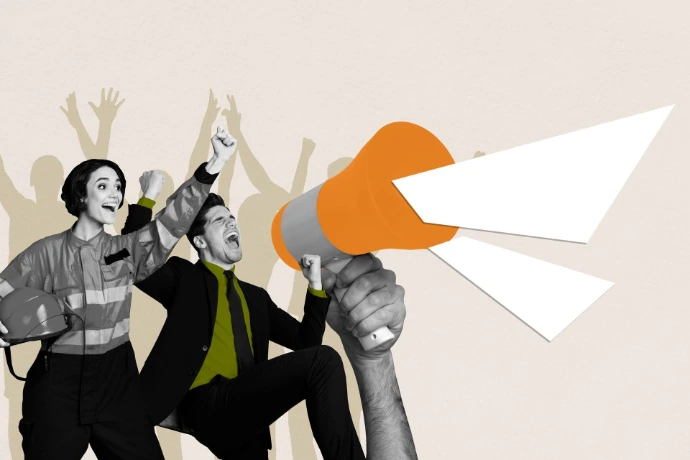
The Better Place Series
Twenty people. One sentence. Forty-five minutes that might change what you do on Monday.
Every talk in this series starts the same way:
"Making a better place by…"
What follows is up to the speaker. A cardiologist. A youth-shelter director. A founder who quit to fix something small and unglamorous. We don't book keynote speakers. We invite people who are actually doing the thing, and then we put them in a room with people who'll do something about it.


What a session looks like
One speaker. One sentence, and then the part that matters most.

The Talk
20–25 minutes. No slides required. The speaker completes the sentence "Making a better place by…" and tells us how it's actually going, including the parts that aren't going well.
The Conversation
20 minutes, unmoderated-ish. Questions, arguments, offers of help. This is the point.
The Room
Deliberately small. Around 30 people, so everyone can speak.
The Invitations
The speaker invites up to 20 people from their own network. With their agreement, Kuerate adds up to 10 more we think should be in that room.
The Connection
Everyone in attendance can be connected to everyone else automatically, or opt out, no questions asked. You leave with the room, not just the talk.
Afterwards
Speakers can share notes, links, papers, or a way to help. We don't record and monetize you.
Where
Sessions currently run virtually across Australia, the United Kingdom and the United States.
We are more connected than ever, and it has never felt worse
In 2025, the World Health Organization published the first global report of its Commission on Social Connection. The finding: one in six people worldwide are lonely, and social disconnection contributes to an estimated 871,000 deaths a year, roughly one hundred people every hour.
At work it's no better. Gallup finds around one in five employees feel lonely on any given day, rising to a quarter of fully remote workers. Gartner has started classifying loneliness as a business risk, not a wellbeing footnote.
And the place professionals were supposed to go to connect? An independent analysis of more than a million social posts in 2026 found LinkedIn to be the most AI-saturated platform studied, with over 40% of long-form posts fully machine-generated. LinkedIn's own answer was to add a button letting members report "AI slop."
So: endless feeds, vanishing signal, and a room full of people who don't know each other.
We think the fix isn't another feed. It's a room.

The voices we're looking for
We are not looking for thought leadership. There is a global oversupply.
We're looking for people who finish the sentence with something specific:
The practitioners. Not the person with a framework about homelessness, the person who runs the shelter.
The unglamorous fixers. Sanitation. Debt advice. Foster-carer recruitment. Payroll for care workers. The problems nobody builds a conference around.
The people who changed their mind. Someone who spent a decade doing it one way and now says, publicly, that it was wrong.
The early ones. Two years in, no exit, no book deal, still not sure it'll work. We'd rather hear that than a victory lap.
The ones who aren't asked. Voices that don't get the mainstage because they don't have a comms team, a title, or the accent that usually gets the booking.
The quietly enormous. People whose work touches thousands and who have never described it out loud to a room of strangers.
What we're not looking for: product pitches, fundraising asks disguised as talks, or anything that could have been written by a language model at 2am.
If you're reading this thinking "I know exactly who should do this" that's the person. Tell us.